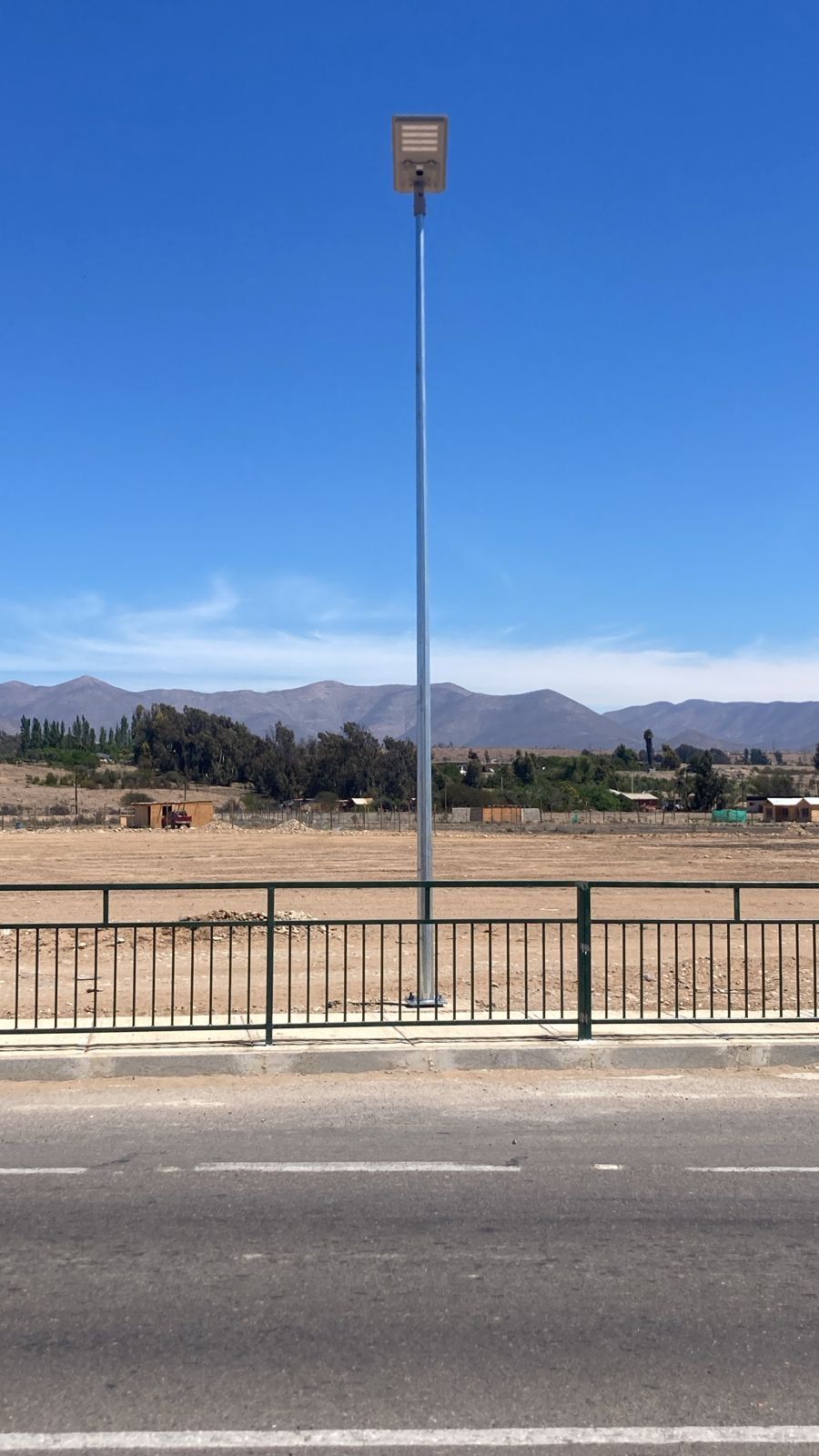
Off-Grid Solar Street Light for Rural Villages

Rural · Chile · By Luxey Lighting
Rural Roads With No Electricity Supply

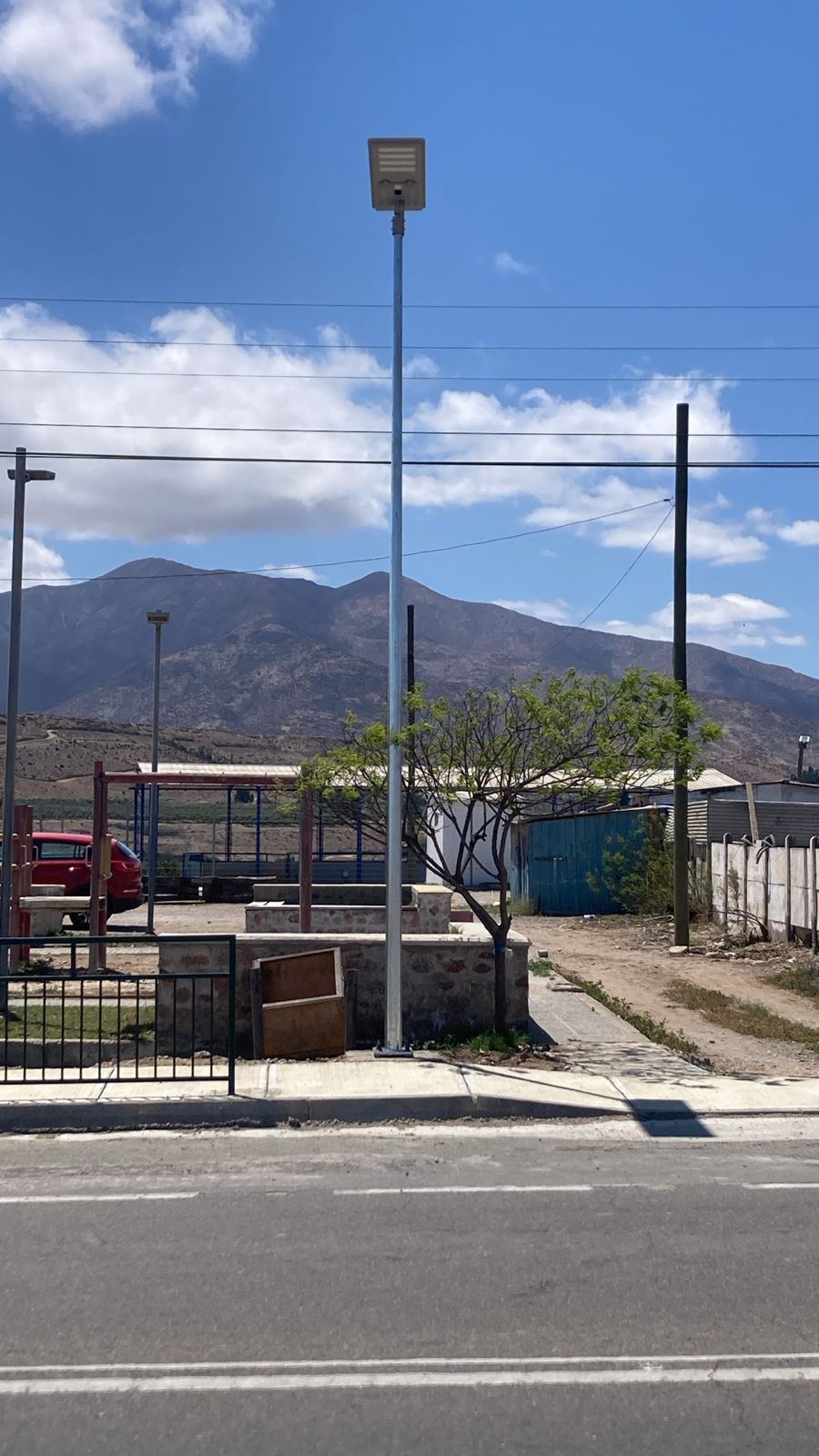
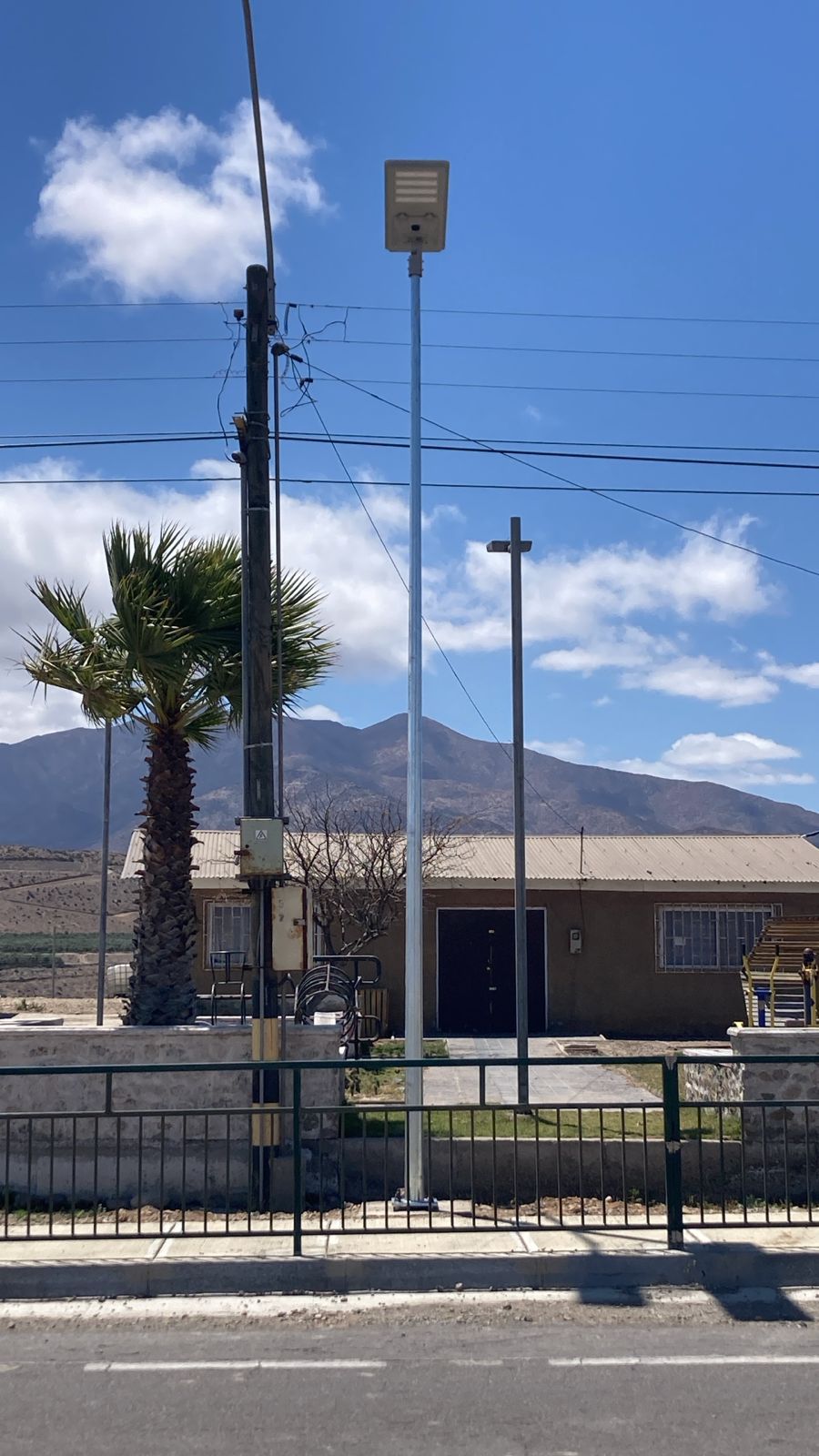
Solar street lights installed on rural roads that have no electricity supply at all — what Colombia and Peru formally class as non-interconnected zones. No grid connection needed, and installation is straightforward anywhere.

  • No grid connection needed
  • Straightforward installation anywhere

Why the grid never arrived

Rural roads in this part of Chile sit far from the nearest transformer. Extending the network means poles, conductor and a permit process measured in months, and for a road with a handful of houses the connection cost can exceed the cost of the lights several times over.

When the line cannot be justified, the lighting has to be resolved on the pole itself: generation, storage and control all inside the luminaire.

Sizing a system with no backup power

A grid-connected solar light can lean on the grid after a bad week. A road with no grid has only its battery, so the design starts from the worst month rather than the average one: sun hours, autonomy days, and the dimming profile the road actually needs between midnight and dawn.

The packs on these projects are LiFePO4 rated for 3,000 cycles at 80% state of health, charged through an MPPT controller, in an IP65 housing rated -20 to +65 °C. The radar sensor drops the luminaire to a 30% baseline and returns it to full output on detection, which is what carries the battery through a run of cloudy days.

Installation without trenching or cabling

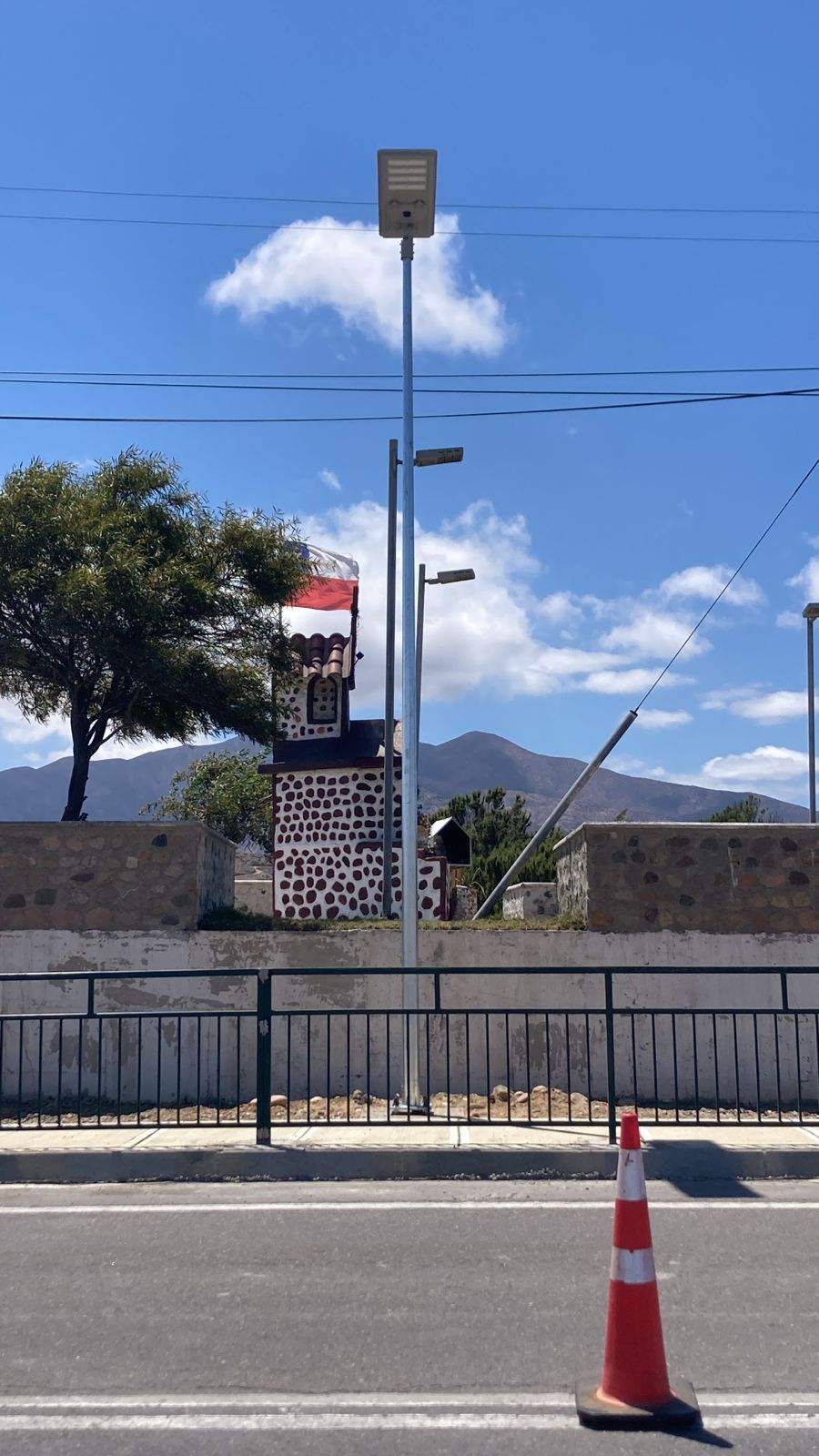
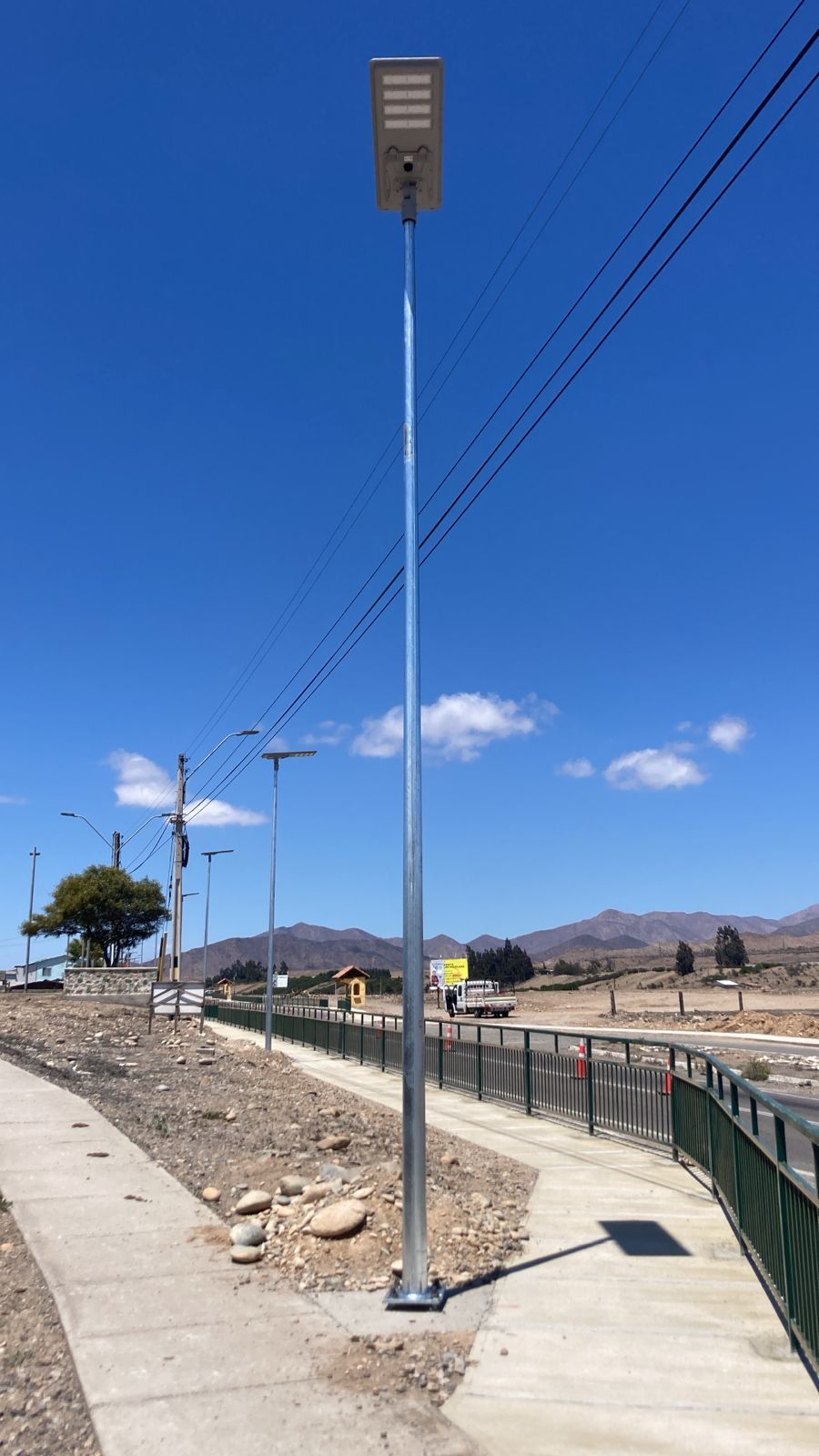
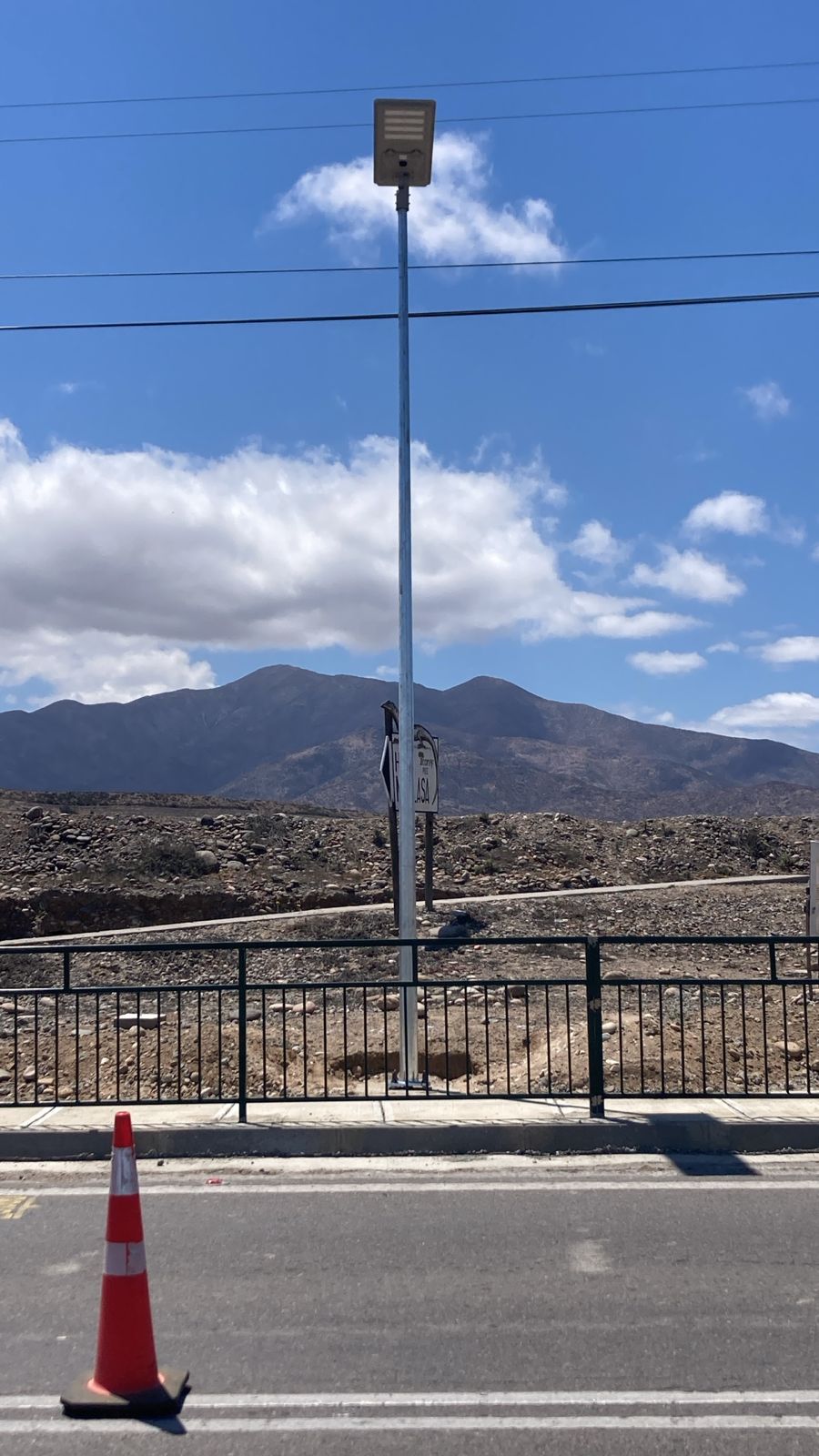
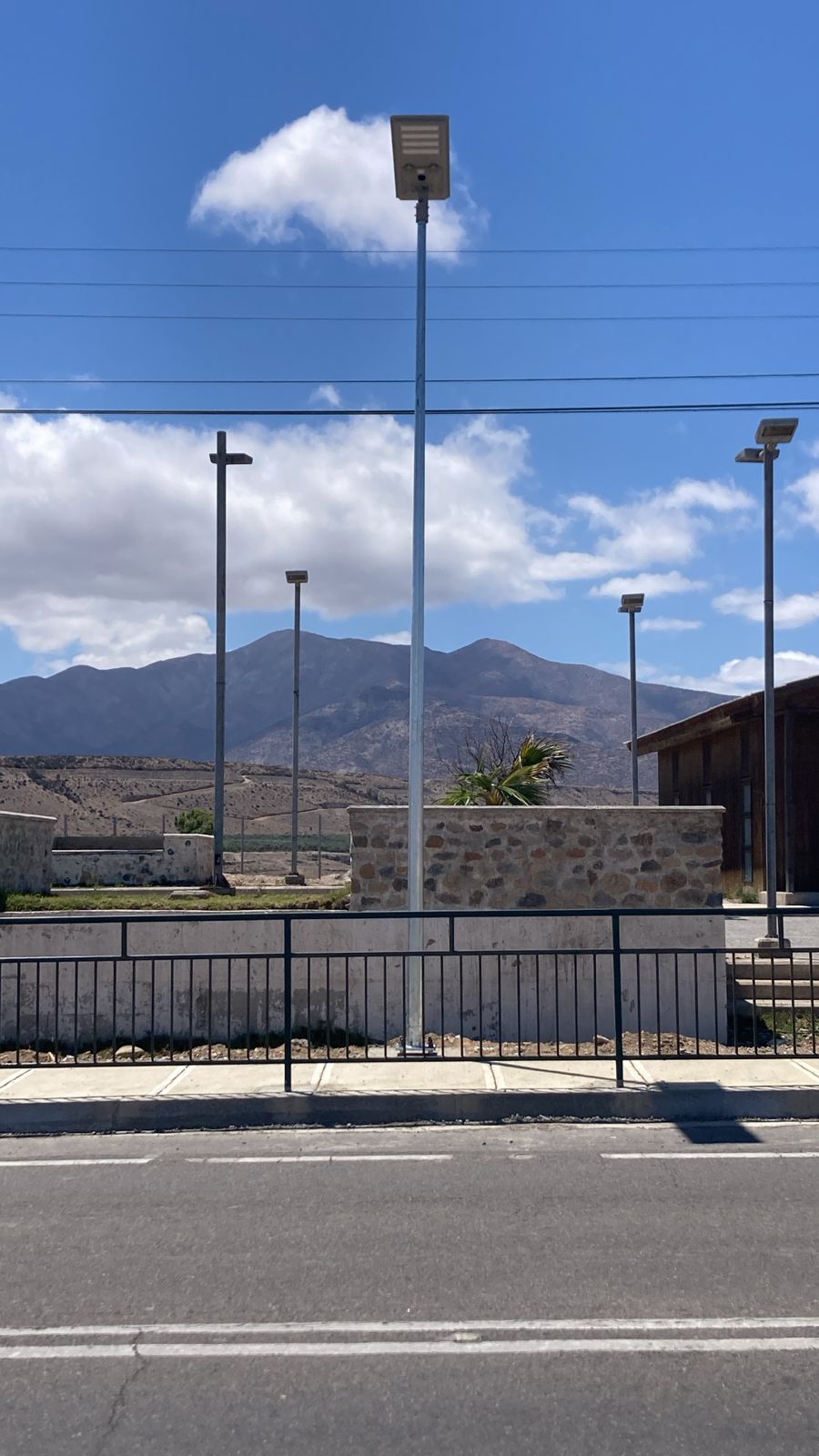
There is no conductor to pull and no transformer to energise. Each pole needs a foundation and nothing else, so a stretch of road goes into service without a single metre of trench.

What the road looks like after dark

The 40W luminaires on this project light the carriageway and the shoulder where people actually walk, with no diesel generator and no monthly bill. That is the whole case for off-grid in a place the network is never going to reach.
Project Gallery

Frequently asked questions

How many days of autonomy do I need for a village with no grid?+
Three to five days is the usual starting point for a rural road. The right number comes from the worst month's sun hours at your site, not from a rule of thumb — send us the coordinates and we size it.
What wattage suits a 6-8 m pole on an unpaved road?+
Most village roads at that mounting height land between 30W and 60W, depending on the width of the carriageway and the spacing between poles. A DIALux run settles it before you commit.
Can it work where winter sun is very low?+
Yes, with the battery sized for the worst month. One of our Chilean sites at Lonquimay operates at -3 to -5 °C in snow, and the LiFePO4 pack works across the -20 to +65 °C range.
How many 40 W units did this project use?+
The road runs on 40 W luminaires, and the count follows spacing: one pole every 25–35 m at 6–8 m mounting height, so a kilometre takes roughly 30 to 40 units. What matters more than the count is that each pole is a complete system — generation, storage and control inside the fixture — so there is nothing to trench between them.
How is the system sized when there is no grid to fall back on?+
From the worst month, not the average: sun hours, autonomy days and the dimming profile. The packs are LiFePO4 rated 3,000 cycles at 80% state of health, charged through an MPPT controller, in an IP65 housing rated -20 to +65 °C. The radar sensor drops the luminaire to a 30% baseline after 15 s with no movement, which is what buys the extra autonomy.

Your Project Could Be Next

Tell us your site conditions and target — our engineers will propose a lighting solution and, for solar projects, a free DIALux simulation.

Discuss Your Project
← Back to All Cases