
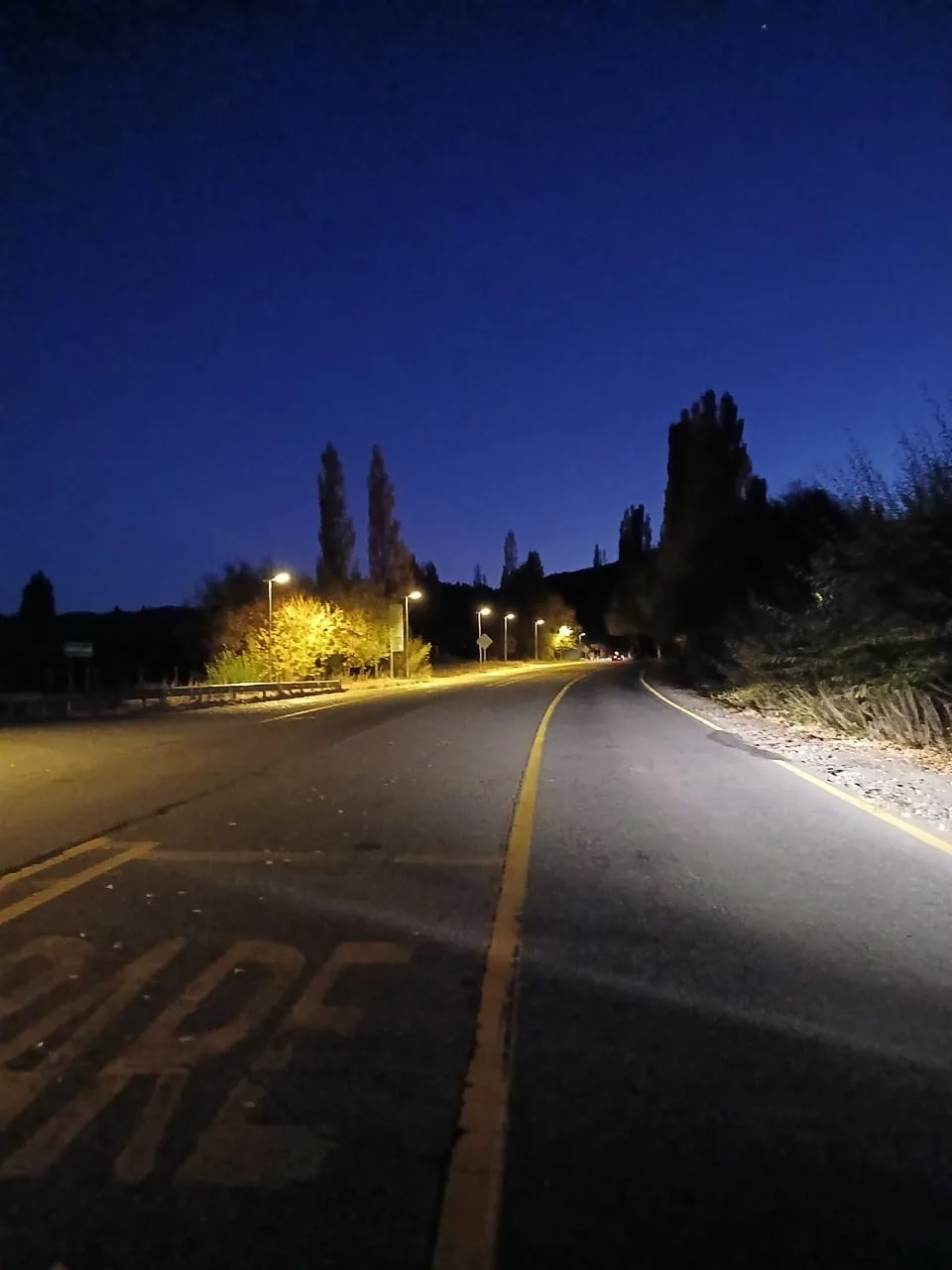
A dark-sky specification is not a colour temperature. It is a measurement: the share of radiant power the luminaire puts out between 400 and 500 nanometres, where night vision and atmospheric scattering are most sensitive. Lonquimay's brief capped that share below 7%, at -5 °C, on a solar supply.
In the heart of the Araucanía Region lies Lonquimay, a place known for its stunning landscapes and extreme Andean climate. Here, infrastructure isn't just about utility; it’s about resilience and environmental harmony. Our latest project—installing specialized solar street lights—proves that sustainable energy can thrive even in the most challenging conditions.
Lonquimay is famous for its frigid winters. During our installation, temperatures consistently hovered between -3°C and -5°C.
For many solar systems, cold is a killer for battery efficiency. However, our specialized systems are engineered with:
High-Resilience Lithium Batteries: Designed to maintain optimal discharge rates in sub-zero temperatures.
Intelligent Thermal Management: Ensuring reliable illumination from dusk to dawn, regardless of the frost.
Chile is a global leader in Dark Sky Protection. Under the recent 2023 environmental decrees, lighting projects must minimize blue light pollution to protect astronomical observations and local biodiversity.
Our luminaires installed in Lonquimay feature:
<7% Blue Light Content: Meeting the most stringent Chilean mandates.
Amber-Toned Precision: Providing high visibility for drivers on the Southern roads while keeping the night sky pristine.
Eco-Friendly Optics: Directing light exactly where it’s needed, preventing upward spill.
"The sky in Lonquimay is so brilliantly blue! Our mission is to keep it that way, even after the sun goes down."
By choosing zero-cabling and zero-energy-bill solar solutions, the Lonquimay project offers:
Instant Effect: Swift installation without the need for destructive trenching in sensitive Andean soil.
Reduced Maintenance: Durable components built to withstand the high-altitude UV and snow.
Carbon Neutrality: A direct contribution to Chile’s goal of a greener future.
At the intersection of advanced engineering and environmental stewardship, our project in Lonquimay stands as a beacon of what is possible. We aren't just selling street lights; we are providing a reliable, "dark-sky friendly" infrastructure that respects the unique ecology of Chile.
Whether it’s the freezing temperatures of the Andes or the strict lighting regulations of the North, our mission remains the same: to light the way forward without leaving a footprint.
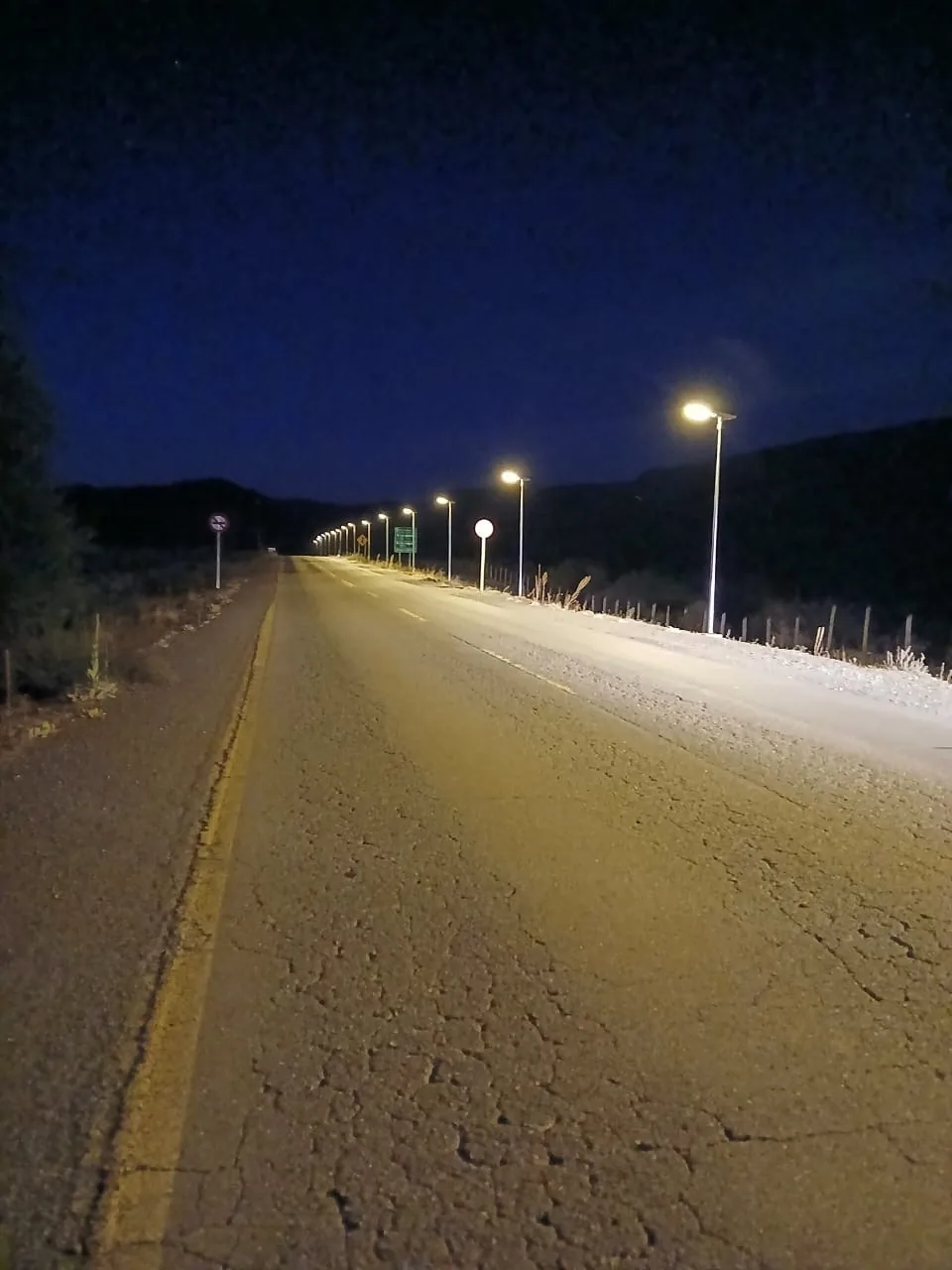
The 7% figure is calculated from the spectral power distribution, not read off a CCT label. Two 3000 K luminaires can differ in blue content depending on the phosphor and the drive current, which is why the project asked for the SPD and the measurement method. For a municipality, the practical requirement is to put both in the tender: the limit, and the test that proves it.
How cold was it during the Lonquimay installation? Temperatures hovered between -3 °C and -5 °C for the duration of the work, in the Araucanía Region. For many solar systems cold is what kills battery efficiency, which is why the project is used as the reference case for sub-zero operation.
How does the battery hold up below zero? Two things: high-resilience lithium cells designed to keep their discharge rate in sub-zero temperatures, and intelligent thermal management that keeps the luminaire lit from dusk to dawn regardless of frost.
What blue-light limit does the project meet? Under 7% blue light content, which is the figure Chile's 2023 environmental decrees require. The luminaires are amber-toned, so drivers on the southern roads keep their visibility while the night sky stays pristine, and the optics direct light where it is needed instead of upwards.
What does zero-cabling mean on Andean soil? No trenching in sensitive Andean ground, so installation is fast and the site is not disturbed; no energy bill; and less maintenance, because the components are built to withstand high-altitude UV and snow. The project also contributes to Chile's carbon goals by running on its own generation.
Our 25-engineer team provides free project consultation and fast, accurate quotations.
Get a Quote